Fast. Easy. Fun. Repeat.
There’s something that makes me very sad—as a business owner, but mostly as a human.
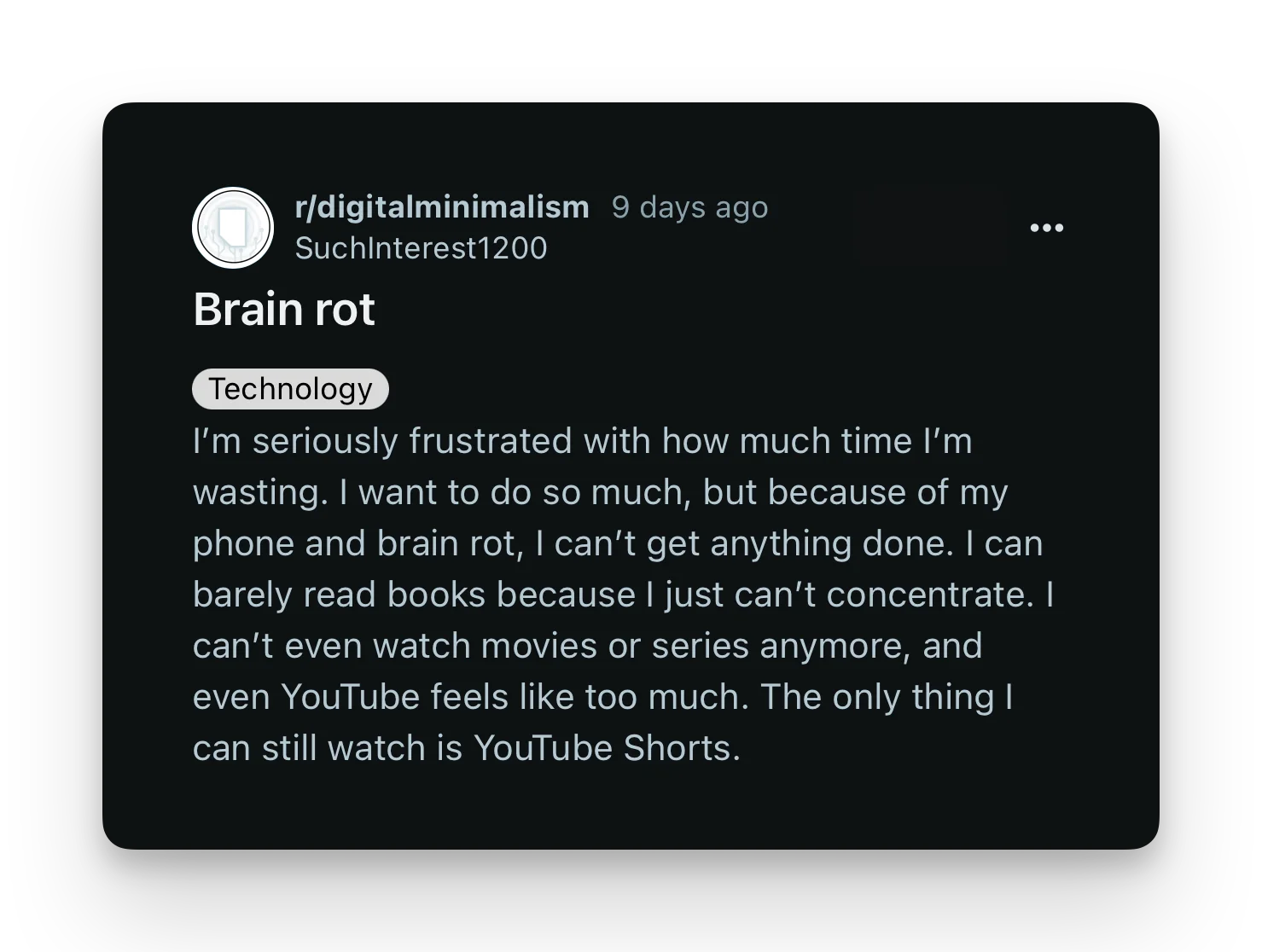
People are being re-wired to crave fast, easy and fun.
And if it doesn’t fall into one of those categories—it’s not worth it.
We’re already back on the hunt for fast, easy and fun.
What happened to slow, hard and boring?
Slow forces presence. It makes us notice, reflect, and engage deeply.
Hard builds character, resilience, and a sense of accomplishment.
Boring is where ideas incubate, creativity emerges, and deep work happens.
When was the last time you let yourself be bored?
When was the last time you did something hard?
When was the last time you slowed down and actually sat with your thoughts?
As a business owner this is making my job harder. I have to write shorter, speak faster and hijack people’s emotions— something I refuse to do.
How do I get people to care about changing the world when all they’re doing is chasing quick dopamine?
Why would you care about changing the world when you can just numb out and watch another Mr. Beast video or cat TikTok?
As a human this is making me concerned. People’s brains have been so hijacked by social media and the pace of today that they can’t even watch a movie without getting the itch to do something else.
But my biggest question is—where does it end?
Are we all going to fry our brains into short-circuiting like a computer with a current too strong for what it can handle?
What we gain in convenience, we lose in depth.
Attention spans are shrinking, but so is patience, resilience, and the ability to sit with discomfort. These are fundamental to building character.
The best things in life—meaningful work, deep relationships, personal mastery—are rarely fast, easy, or purely fun.
The inability to tolerate boredom means fewer people engage in meaningful work or deep thinking. We become passive consumers, rather than active participators— watching, scrolling, consuming rather than creating, building, or contributing.
I have a visceral image in my mind of someone eating at a fast food restaurant, not stopping for air and drinking whilst still eating.
That’s how I see our consumption of content.
It’s fast media. And, just like fast food, it’s really really bad for us.
I’m probably not alone in my experience of horror being in public noticing how many people are staring down at their phones. It’s even worse when getting public transport during commuting hours.
But what happens when people can’t sit still, be alone with their thoughts, or process emotions without distraction?
Are we heading toward a world where depth is a dying art and only surface-level interactions remain?
The problem here is that the solution is hard.
And, if hard is what we’re avoiding, will we ever reach the solution?